Financial Inclusion and Consumer Protection
Financial inclusion enables individuals and firms to participate in and benefit from the formal financial system. A responsible approach towards financial inclusion emphasizes robust consumer protection frameworks and effective financial capability interventions to address the opportunities and risks of digital finance and fintech.

Key Publications
An Introduction to Developing a Risk-Based Approach to Financial Consumer Protection Supervision : Guidance Note (English)
Financial products and services play a significant role in enabling consumers to build their resilience, seize opportunities, and meet essential needs. However, consumers also face a range of risks when engaging with such products and services. For financial consumer protection (FCP) to be helpful in mitigating such risks, effective FCP supervision, in addition to regulation, is essential. However, authorities’ supervisory resources are always limited. The reality of limited resources is typically even more acute in emerging markets and developing economies. Authorities around the world are therefore increasingly focusing on implementing ‘risk-based’ supervision (RBS) for FCP. RBS is intended to focus limited resources on the most important issues within an authority’s supervisory scope, in a forward-looking and proactive manner. This Note provides guidance on key issues and decisions that authorities should consider when establishing FCP RBS.
Developing and Operationalizing a National Financial Inclusion Strategy : Toolkit
Developing a national financial inclusion strategy (NFIS) can help countries chart a clear and coordinated path toward greater financial inclusion. This toolkit provides practical guidance on developing and operationalizing a NFIS. The toolkit draws on over 20 country experiences and is informed by the World Bank Group’s role as a technical partner in NFIS development and operationalization in a diverse range of country contexts.
Consumer Risks in Fintech - New Manifestations of Consumer Risks and Emerging Regulatory Approaches: Policy Research Paper
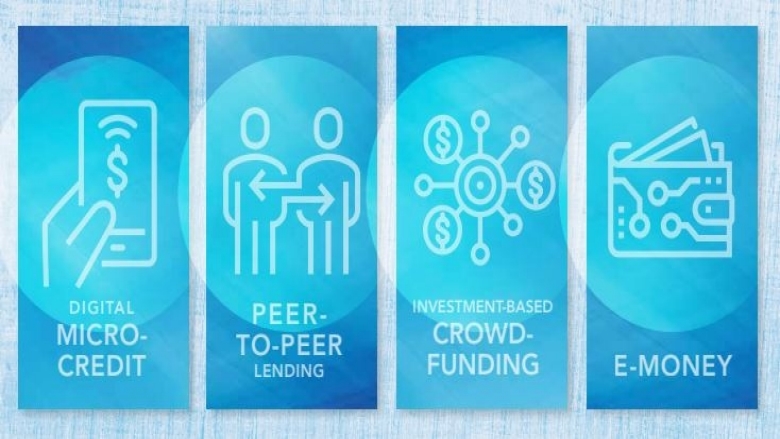
Fintech is increasingly recognized as a key enabler for financial sectors worldwide, enabling more efficient and competitive financial markets while expanding access to finance for traditionally underserved consumers. A critical challenge for policy makers is to harness the benefits and opportunities of fintech while managing its risks, including for consumers. The COVID-19 pandemic further accelerated the widespread transition of consumers to fintech and digital financial services, highlighting their significant benefits while also demonstrating how risks to consumers can increase in times of crisis and economic stress. This paper (1) identifies a range of consumer risks posed by fintech, focusing on four key fintech products (digital microcredit, peer-to-peer lending, investment-based crowdfunding, and e-money) and (2) discusses consumer protection regulatory approaches emerging internationally for policy makers to consider when developing regulatory policy to target such risks. Examples of regulatory approaches are drawn from country examples and international literature. The paper also discusses a range of implementation considerations.
Good Practices for Financial Consumer Protection, 2017 Edition
Over the past decade, financial consumer protection has become an increasingly mainstream priority for policymakers. A strong consumer protection regime is key to ensuring that expanded access to financial services benefits consumers, enabling them to make well-informed decisions on how best to use financial services, building trust in the formal financial sector, and contributing to healthy and competitive financial markets. The World Bank’s Good Practices for Financial Consumer Protection (the Good Practices) was developed in 2012 as a contribution to the emerging global set of tools on financial consumer protection. Since then, international guidance and country practices regarding financial consumer protection have substantially evolved. The 2017 Good Practices is designed to serve as a comprehensive reference and assessment tool for policymakers that consolidates the latest research, international guidance, and country examples. A thorough update of the previous edition, this guide expands upon priority areas such as supervisory techniques, effective disclosure, and digital finance, and also emphasizes the practical considerations and tradeoffs that policymakers face when implementing new policies and practices.



Experts

Jennifer Chien
Senior Financial Sector Specialist

Gian Boeddu
Senior Financial Sector Specialist

Ivor Istuk
Senior Financial Sector Specialist

Sheirin Iravantchi
Senior Financial Sector Specialist

Sergio Jose de Mesquita Gomes
Senior Financial Sector Specialist

Verónica Trujillo
Financial Sector Specialist